HomeShopOur StoryJournalFAQWishlistCart
手記

From Our Workshop

The NAMBUTEKKI Journal

Stories of craft, culture, and the living tradition of Nambu ironware from Morioka.

6 Articles Updated Weekly Free Care Guides

Showing 6 articles across all categories

Featured伝統The Art of Nambu Ironware
Craft & Heritage

The Art of Nambu Ironware: A 400-Year Living Legacy

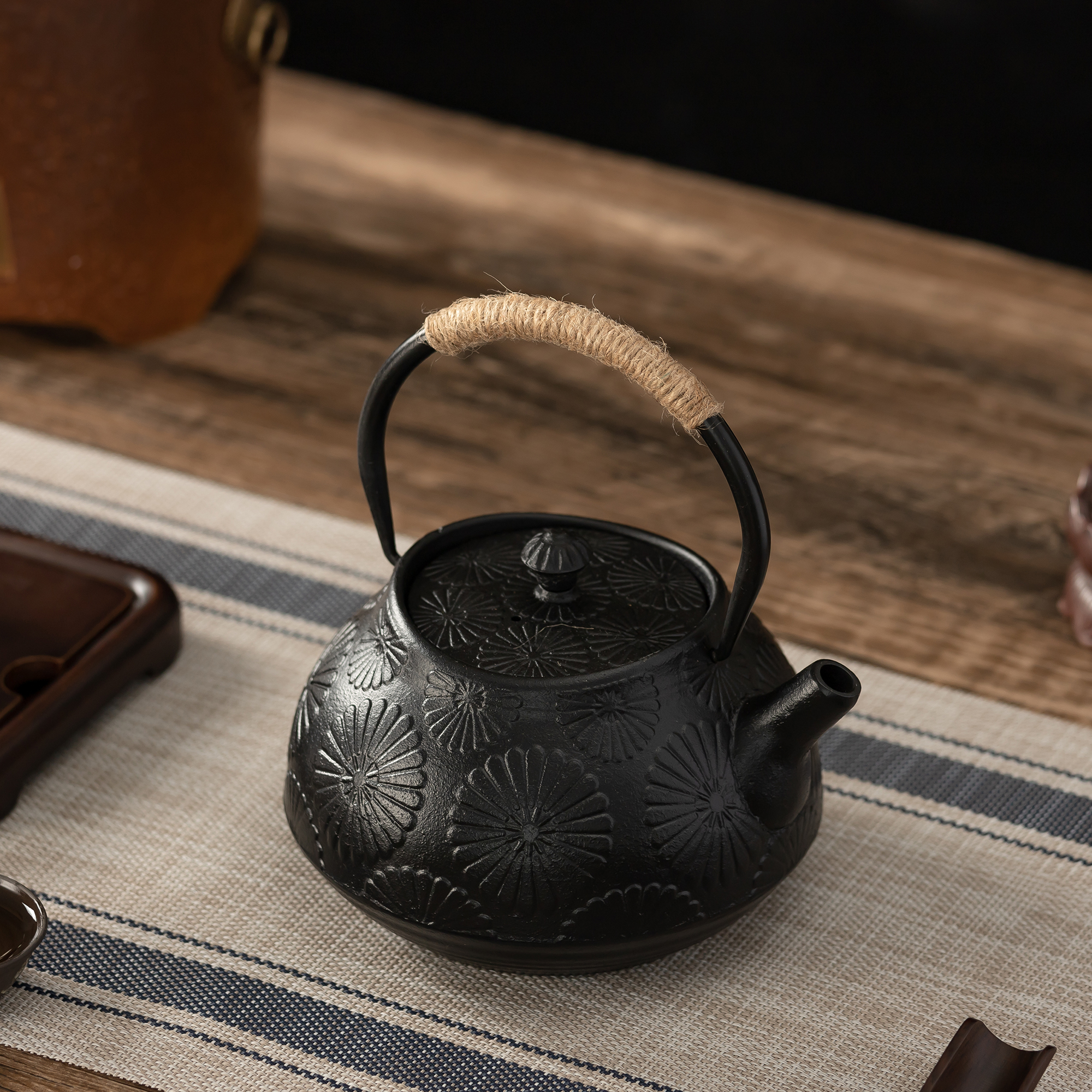
In the foundries of Morioka, master artisans still pour molten iron into sand molds by hand — one kettle at a time, one mold at a time, destroyed after each casting. No two pieces are alike. This is the world of Nambu Tekki, where every hammer stroke carries four centuries of unbroken tradition.

Each sand mold is used once, then broken — making every kettle truly one of a kind
Mar 15, 2025· 8 min read·by NAMBUTEKKI Workshop

Based on interviews with 3rd-generation Nambu Tekki artisans in Morioka

The sound of molten iron meeting sand is unlike anything you've heard — a sharp, brief hiss, then silence as the liquid metal settles into its temporary home. Within minutes, the mold cools. Within hours, it will be broken apart, never to be used again.

The Sand Mold That Lives Once

At the heart of Nambu ironware lies a paradox: the most precious objects are born from the most disposable tools. Each sunamono — sand mold — is hand-packed grain by grain around a wooden core, then dried in the Morioka winter air. Once the iron has been poured and cooled, the mold is deliberately shattered. The kettle that emerges is the only one that will ever come from that particular mold. This is not inefficiency. It is the definition of handmade.

"We don't make kettles. We make the mold that allows a kettle to exist — once." — Master Artisan, 3rd Generation

Four Centuries of Quiet Persistence

The Nambu Tekki tradition dates to the mid-17th century, when the Nambu lords of Morioka Castle invited kettle-makers from Kyoto and Edo to establish foundries in their domain. The region's high-quality iron sand, clean water, and cold winters — ideal for slow, even casting — created the perfect conditions for a craft that would outlast the feudal era itself.

When Japan's feudal domains were abolished in 1871, the clan patronage that sustained these workshops vanished. Most foundries closed. But in Morioka, a handful of master families chose to continue — selling directly to ordinary households, adapting their craft to survive. That stubbornness is the reason NAMBUTEKKI exists today.

What Your Hands Will Feel

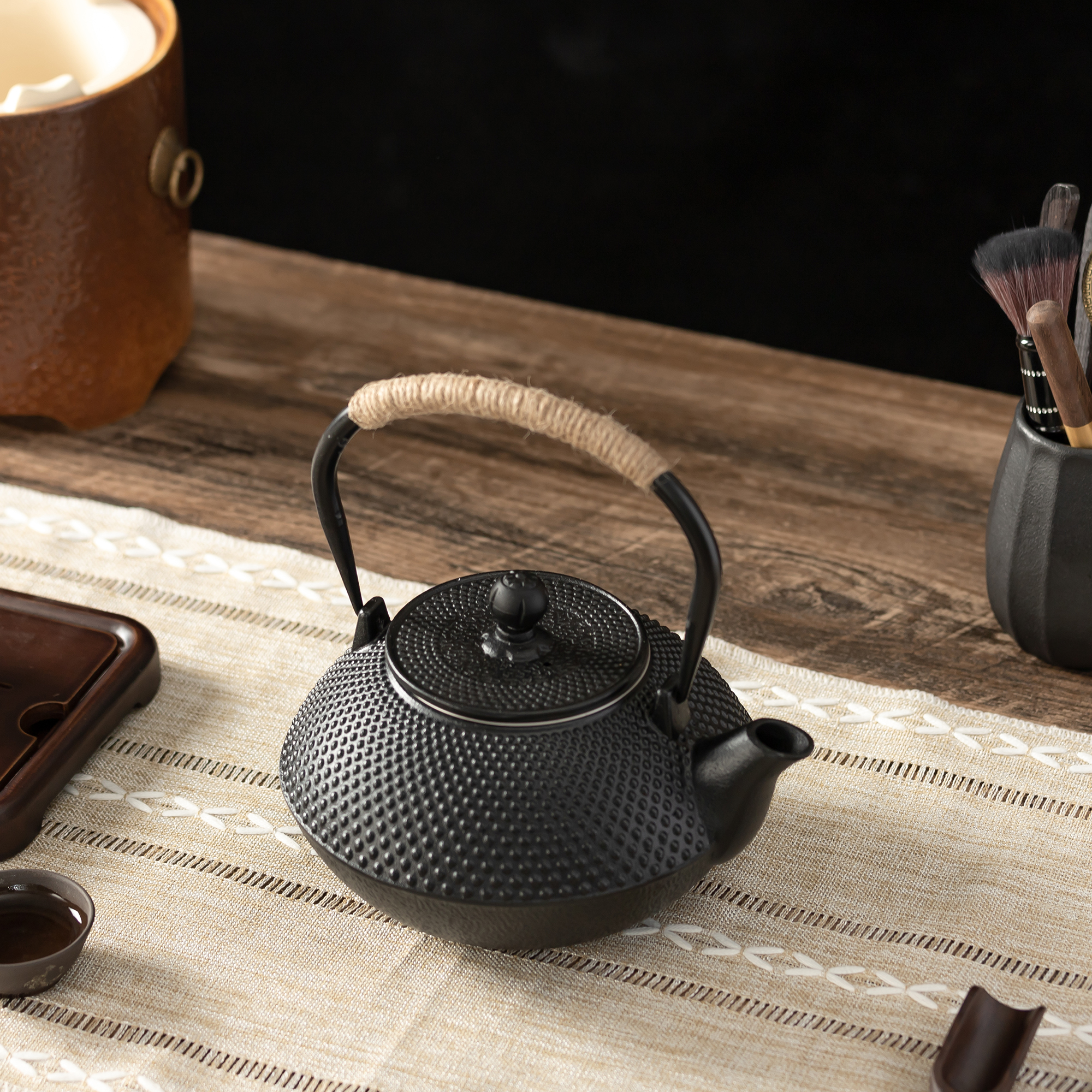
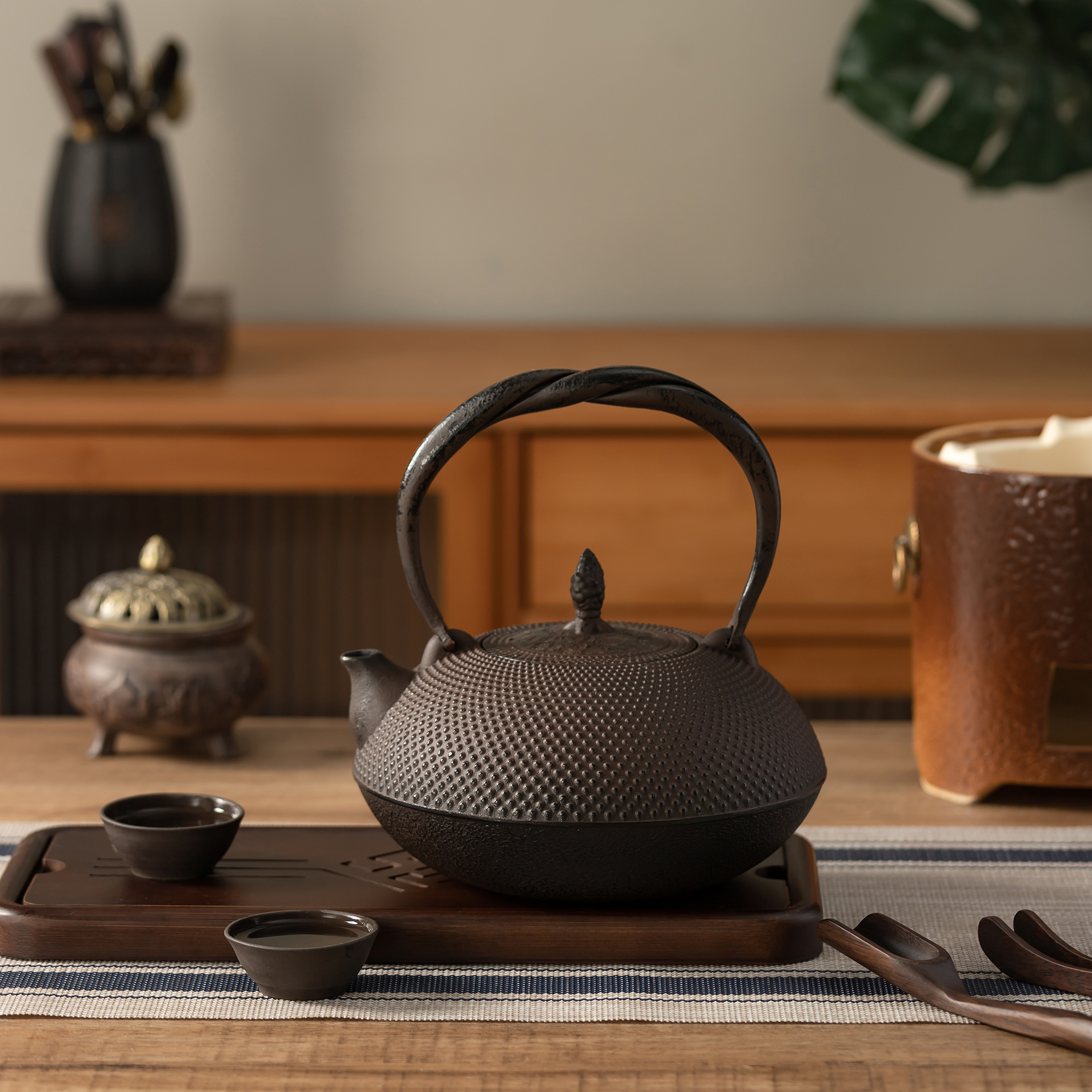
Pick up a NAMBUTEKKI kettle and you'll notice things no factory can replicate: the subtle texture of sand-cast iron beneath your fingertips, the precise weight distribution that makes a 1.5kg kettle feel balanced in one hand, the whisper-tight seal between body and lid that prevents even a drop from escaping. These are not design features. They are the natural consequences of a process that has no shortcuts.

Ready to hold four centuries in your hands?

Browse Our Collection
手入Caring for Your Tetsubin
Care Guide

Caring for Your Tetsubin: The Complete Guide

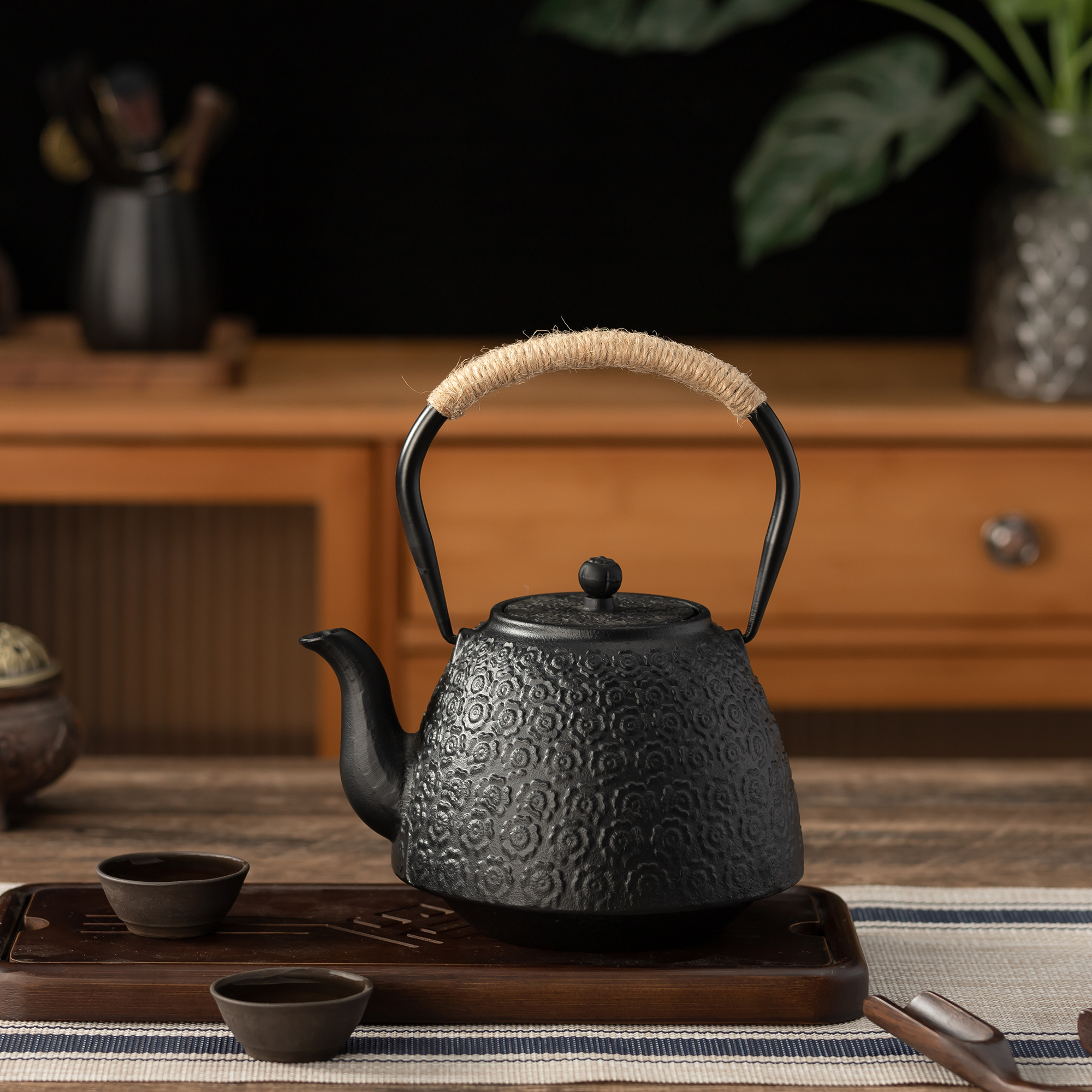
A cast iron kettle is not a delicate object — it is built to outlast you. But like any living thing, it responds to attention. The interior develops a mineral patina that protects the iron and sweetens the water. The exterior tells the story of your household. Here is how to honor both.

Empty, dry, lid open — three habits that add decades to your kettle's life
Feb 28, 2025· 6 min read·by NAMBUTEKKI Workshop

Traditional care methods passed down through generations of ironware masters

Your tetsubin arrived wrapped in washi paper, nestled in a wooden box. Before it boils its first cup, it needs to be awakened — a simple ritual that takes thirty minutes and lasts a lifetime.

First Use: The Awakening

Rinse the interior with warm water — no soap, ever. Fill to 70% capacity and bring to a rolling boil. Pour out the water while still hot. Repeat this cycle three to four times. On the final boil, reduce the heat and let it simmer gently for ten minutes. This washes away residual sand from the casting process and begins forming the mineral layer that will protect your kettle from within.

The Three Daily Habits

1. Empty after every use. Stagnant water is the enemy of iron. After pouring your last cup, empty any remaining water while the kettle is still warm — the residual heat helps evaporate lingering moisture.

2. Dry thoroughly. Place the kettle on low heat for 30 seconds after emptying to drive out any remaining moisture. Wipe the exterior with a soft, dry cloth.

3. Store with lid open. Air circulation prevents condensation from forming inside. Rest the lid beside the kettle or place it upside-down on top, slightly ajar.

"A kettle that is used daily will rarely rust. A kettle that sits with water inside will rarely survive." — Old Morioka saying

If Rust Appears

Don't panic. Light surface rust is normal — it means the iron is alive and reacting. Scrub gently with a soft brush or green tea leaves (the tannins help), then boil water 2-3 times. The mineral patina will naturally restore itself through regular use. Deep pitting from prolonged neglect requires professional restoration — contact us for guidance.

Have questions about caring for your kettle?

Visit Our FAQ
健康Health Benefits
Wellness

The Science Behind Iron-Enriched Water

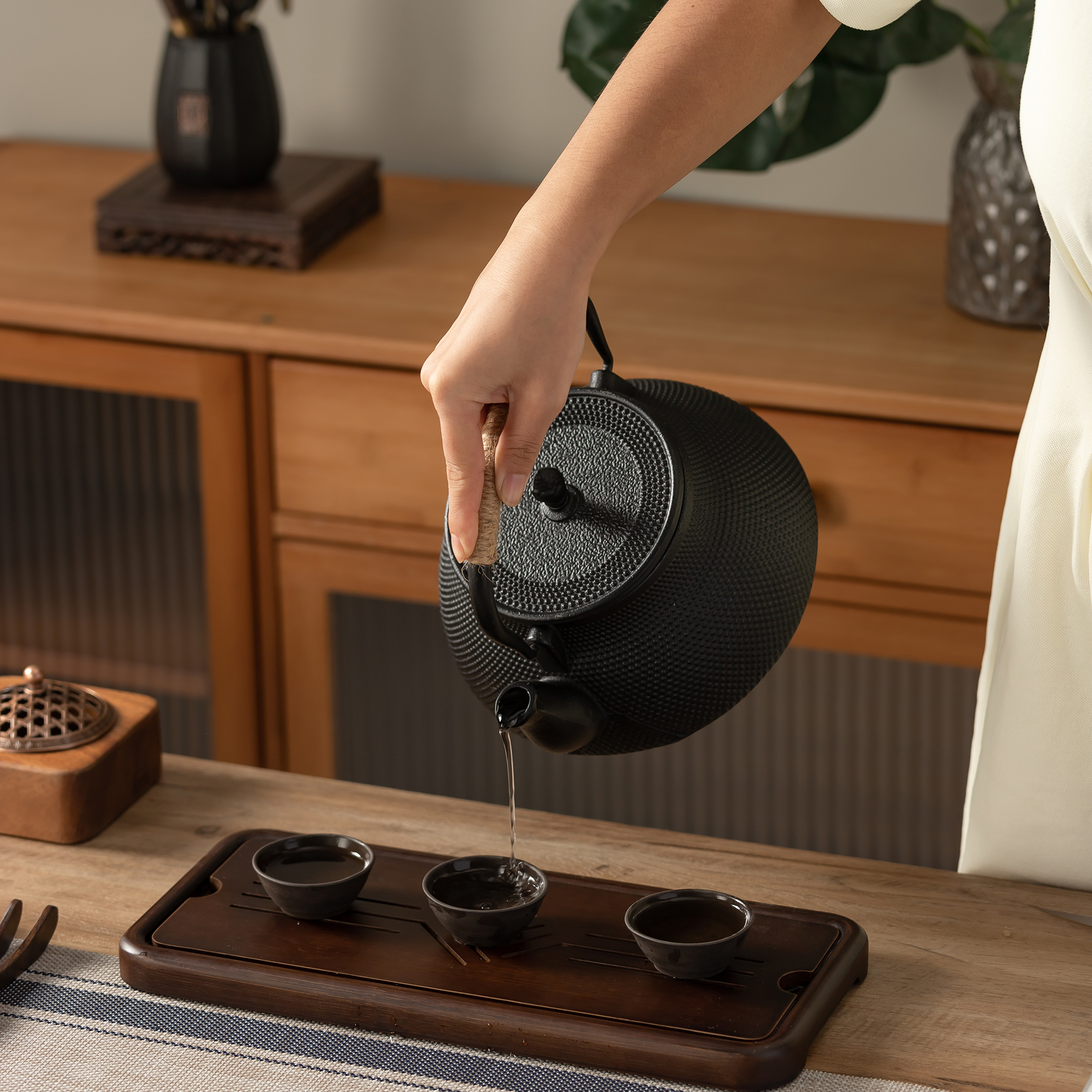
Water boiled in an uncoated cast iron kettle releases bioavailable ferrous iron — the form your body absorbs most efficiently. A single liter can provide 10–20% of your daily iron requirement. This isn't folklore. It's chemistry your grandmother understood intuitively.

1 liter of tetsubin-boiled water ≈ 10–20% daily iron intake
Feb 10, 2025· 5 min read·by NAMBUTEKKI Workshop

Referenced in peer-reviewed nutritional research on dietary iron absorption

In Japan, the connection between iron kettles and health was never debated — it was simply observed. Generations of families who boiled their water in tetsubin reported fewer instances of fatigue and anemia. Modern science has confirmed what intuition always suspected.

Fe²⁺ vs Fe³⁺: The Form Matters

Not all iron is created equal. Your body absorbs ferrous iron (Fe²⁺) far more efficiently than ferric iron (Fe³⁺). When water boils in an uncoated cast iron kettle, the iron that leaches into the water is predominantly Fe²⁺ — the bioavailable form. This is why tetsubin water is nutritionally superior to water boiled in enamel-coated or stainless steel vessels, which release little to no iron.

What the Studies Show

Research published in the Journal of Nutritional Science found that water boiled in traditional tetsubin for 10 minutes contained approximately 0.8–1.2 mg of ferrous iron per liter. For context, the recommended daily iron intake for adult women is 18 mg — meaning a few cups of tetsubin-boiled tea can meaningfully supplement dietary iron, particularly for those at risk of deficiency.

"The tetsubin is perhaps the world's most elegant nutritional supplement — invisible, effortless, and built into the daily ritual of making tea." — Dr. Y. Tanaka, Nutritional Biochemistry

Who Benefits Most

Iron-enriched water is particularly valuable for women of reproductive age, vegetarians and vegans, endurance athletes, and anyone recovering from illness. The gentle, sustained absorption through daily tea consumption avoids the gastrointestinal discomfort often associated with iron supplements.

Experience the difference in every cup.

Explore Our Kettles
贈物Gift Guide
Gift Guide

The Perfect Gift: A Heirloom Tetsubin

Some gifts are consumed by the weekend. A Nambu iron kettle is still being used — daily — fifty years later. It becomes part of someone's morning ritual, their quiet moment, their kitchen's soul. Here's how to choose a piece they'll never forget.

A tetsubin is the rare gift that becomes more valuable with time
Jan 22, 2025· 4 min read·by NAMBUTEKKI Workshop

Gift wrapping with traditional washi paper available for all orders

The best gifts carry meaning beyond their material. A handcrafted Nambu iron kettle is not just a kitchen tool — it is a declaration that the recipient deserves something enduring, something made by human hands, something that will witness decades of quiet mornings.

For the Tea Lover

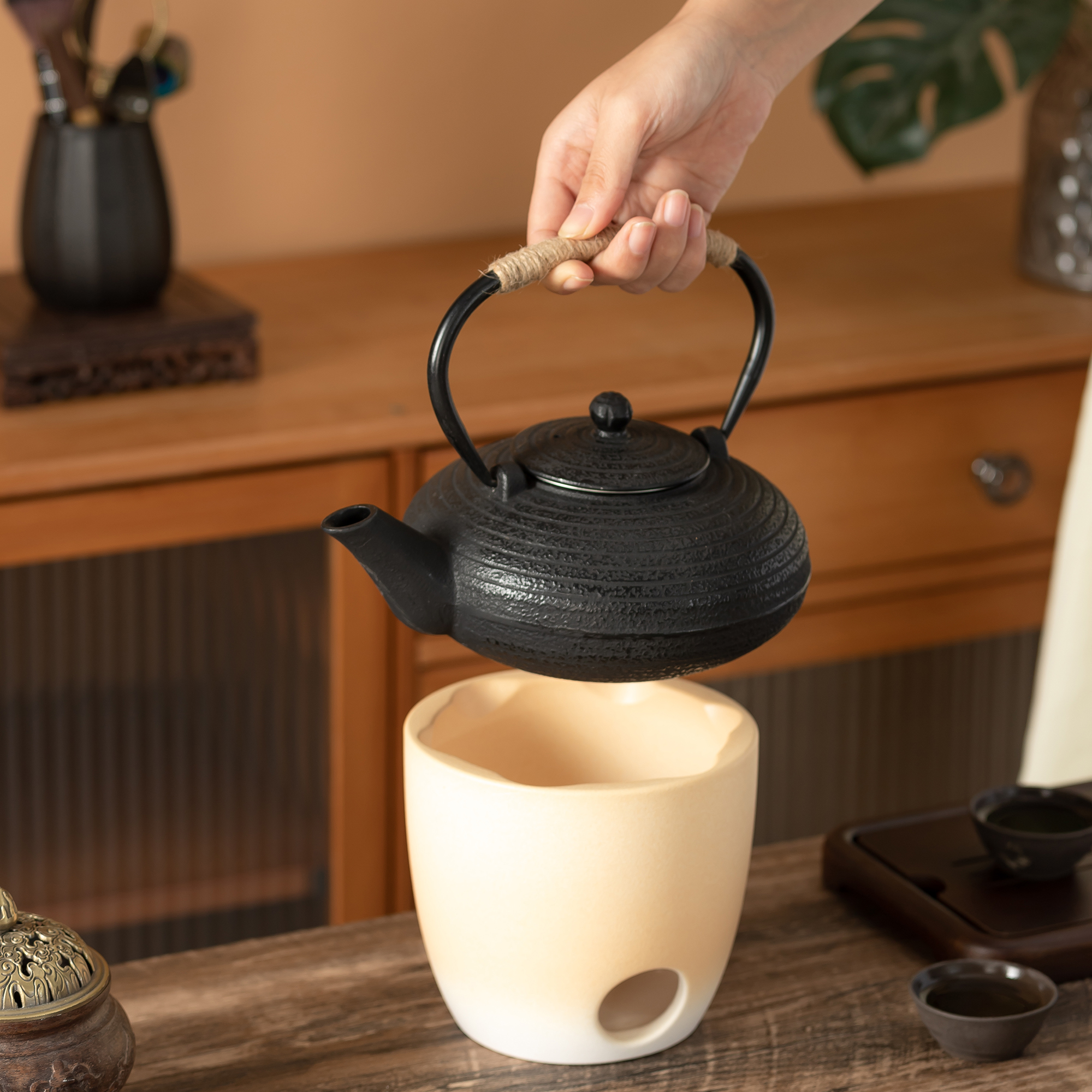
Choose an arare (hailstone) pattern — the most iconic Nambu design. Its raised dots aren't merely decorative; they increase the kettle's surface area, improving heat retention. The 1.0L size is ideal for solo tea drinkers. Pair it with a tatara trivet for a complete set.

For the Design Enthusiast

The itome (thread-line) pattern speaks to minimalists — thin, precise ridges that catch light like the grain of old wood. Its restraint is its statement. The flat-and-round silhouette sits beautifully on open shelving, even when not in use.

For the New Homeowner

A nanbu-gata (traditional Nambu shape) kettle with crane or pine motifs carries wishes for longevity and prosperity — the Japanese housewarming gift for centuries. We include complimentary washi wrapping and a handwritten card with every gift order.

What Makes It an Heirloom

Unlike mass-produced gifts that depreciate, a tetsubin develops character over time. The interior patina deepens. The exterior develops a subtle warmth from years of handling. Decades from now, someone will pick it up and say, "This was my grandmother's kettle." That is the only review that matters.

Find the perfect piece for someone special.

Shop Gift-Ready Kettles
文様Symbolism in Ironwork
Culture

Crane & Dragon: The Ancient Language of Motifs

Before you read the pattern on a Nambu kettle, the pattern reads you. A crane for longevity. A pine for resilience. A dragon for protection. These aren't decorations — they are wishes cast in iron, meant to accompany someone for a lifetime.

12 traditional motifs — each carries a specific blessing for the owner
Jan 8, 2025· 7 min read·by NAMBUTEKKI Workshop

Illustrated guide to 12 traditional Nambu ironware motifs and their meanings

In the Japanese tradition, a motif is never chosen merely for beauty. Each symbol carries centuries of accumulated meaning — a visual language that speaks directly to the heart, bypassing words entirely.

The Crane (鶴 — Tsuru)

Said to live a thousand years, the crane is the supreme symbol of longevity and fidelity. Cranes mate for life, making this motif especially meaningful as a wedding or anniversary gift. On a kettle, a pair of cranes in flight represents a wish for a long, harmonious life together.

The Dragon (龍 — Ryū)

Unlike its Western counterpart, the Japanese dragon is a benevolent creature — a guardian of water, rain, and the sea. On a tetsubin, the dragon serves as a protector of the household, warding off misfortune. The number of claws (three in Japanese tradition, five in Chinese) distinguishes the cultural origin.

The Pine (松 — Matsu)

Evergreen through the harshest winter, the pine embodies resilience and steadfastness. It is one of the "Three Friends of Winter" (pine, bamboo, plum) — a classic grouping that represents the virtues of endurance, flexibility, and the courage to bloom in adversity.

The Plum Blossom (梅 — Ume)

The first flower to bloom in late winter, before the snow has even melted. The plum blossom represents perseverance, hope, and the beauty of starting anew. Its five petals symbolize the five blessings: longevity, prosperity, health, virtue, and natural death.

"When you give someone a kettle with a crane, you are not giving them an object. You are giving them a thousand years of good wishes." — Master Artisan, 2nd Generation

Choose a motif that speaks to your story.

Browse by Motif
風鈴Wind Chimes
Culture

Furin: The Deep Resonance of Cast Iron Wind Chimes

Glass wind chimes tinkle. Cast iron furin resonate — a low, sustained tone that the Japanese associate with the cooling breath of summer. Each one is tuned by ear in our Morioka workshop. No two sound alike. The wind decides the melody.

Each furin is tuned by ear — the artisan listens, never measures
Dec 20, 2024· 5 min read·by NAMBUTEKKI Workshop

Each furin is tuned by ear — no two sound exactly alike

On a humid August evening in Morioka, the only sound is the deep, unhurried ring of cast iron swaying in the breeze. The Japanese call this sound fuurin — wind bell — and for centuries, it has been the auditory equivalent of cool water on summer skin.

Why Cast Iron, Not Glass

Most wind chimes sold today are made of glass or metal tubing — materials that produce a bright, sharp ping. Cast iron creates something entirely different: a resonant, lingering tone that vibrates through the air for seconds after the initial strike. The density of the iron produces overtones that glass simply cannot. It is the difference between a whisper and a voice.

Tuned by Ear

In our workshop, each furin is finished by hand and tested by the artisan's ear alone. There is no electronic tuner, no frequency meter. The artisan suspends the bell, strikes it gently with the paper strip that will become its wind catcher, and listens. If the tone doesn't satisfy — if it doesn't carry that particular quality the Japanese call hibiki (resonance with depth) — the bell is reworked until it does.

"A good furin doesn't announce itself. It arrives — like a memory of cool air." — Master Artisan, 4th Generation

A Summer Tradition

Hanging furin is a Japanese summer ritual dating back to the Heian period (794–1185). Originally made of bronze and reserved for temple grounds, they were believed to ward off evil spirits with their sound. Today, they hang from eaves across Japan — a small, daily reminder that beauty lives in the fleeting, the imperfect, the things we cannot control. The wind, most of all.

Bring the sound of a Morioka summer home.

Shop Furin Collection
便

Newsletter

Stay Connected to the Craft

Receive stories from our workshop, early access to limited editions, and exclusive offers delivered to your inbox.

Join 2,400+ collectors and tea enthusiasts. No spam, unsubscribe anytime.

Your Cart

ESC